
Termite Swarmers vs. Flying Ants
Seeing a group of winged insects inside or around your home can be unsettling, especially when you are not sure what they are. Two of the most common possibilities are termite swarmers and flying ants, and while they may look similar at first glance, the difference between them matters.
Flying ants are often associated with established ant colonies nearby, while termite swarmers can be a sign that a mature termite colony is present in or around the property. Knowing what to look for can help you better understand what is happening and whether professional treatment may be needed.
What Are Termite Swarmers?
Termite swarmers are reproductive termites that leave an established colony to mate and begin new colonies. They are most commonly seen during certain times of the year when temperature, moisture, and other conditions are favorable.
A swarm may last only a short time, but homeowners can still find evidence after the insects are gone. Discarded wings near windows, doors, or other entry points are one of the most common signs.
Termite swarmers are sometimes called alates. Unlike worker termites, which usually remain hidden inside soil or wood, swarmers are visible because they leave the colony and take flight.
What Are Flying Ants?
Flying ants are also reproductive members of a colony. Like termite swarmers, they leave the nest to mate and establish new colonies.
Several types of ants can produce winged reproductives, including carpenter ants. Seeing flying ants does not automatically mean there is a serious structural problem, but repeated indoor activity can indicate that an established colony is nesting nearby.
The challenge is that both termites and ants may appear in groups and have wings, making them easy to confuse without taking a closer look.
How to Tell Termite Swarmers and Flying Ants Apart
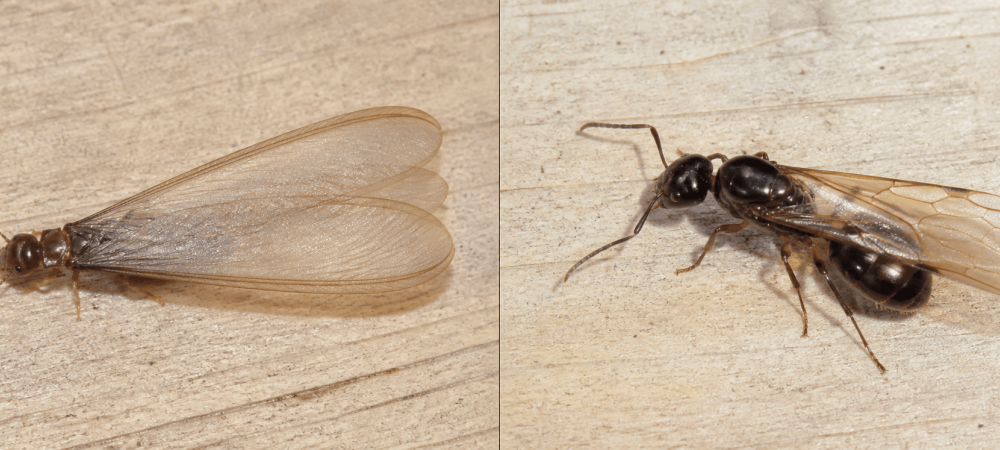
The easiest way to identify the difference is to look at the insects' body shape, antennae, and wings.
Body Shape
Termites have a relatively straight, uniform body without a narrow waist. Their body shape appears more rectangular from head to abdomen.
Flying ants have the pinched waist that is typical of ants. This narrower section between the thorax and abdomen is one of the easiest features to spot if you can get a close look.
Antennae
Termite antennae are straight and may appear slightly beaded. Flying ants have bent or elbowed antennae. This difference can be especially useful when the insects are otherwise similar in size and color.
Wings
Termite swarmers have two pairs of wings that are roughly equal in size and extend beyond the body, while flying ants have larger front wings and smaller rear wings. If you find discarded wings after a swarm, comparing their size and shape can sometimes help you tell the two pests apart.
Where You May Notice Swarmers
Both termite swarmers and flying ants are attracted to light, so homeowners often find them near windows, doors, light fixtures, and other bright areas.
Indoors, you may notice them around:
- Window sills
- Sliding glass doors
- Basement windows
- Light fixtures
- Door frames
- Bathrooms
- Utility rooms
Outdoors, swarms may appear around decks, porches, landscaping, tree stumps, or areas near the foundation.
The location can provide useful context. A swarm outside does not always mean pests are inside the home, but swarmers emerging from walls, trim, flooring, or other interior areas are more concerning.
What Termite Swarmers Can Mean for Your Home
Finding termite swarmers indoors can be a sign that a mature colony is established somewhere in or near the structure. Because termites spend most of their lives hidden from view, a swarm may be one of the first visible signs homeowners notice.
Other signs that may appear along with swarmers include:
- Discarded wings near windows or doors
- Mud tubes along the foundation or walls
- Hollow or damaged wood
- Blistering or uneven surfaces on painted wood
- Small areas of wood that sound hollow when tapped
Termite activity can remain hidden for long periods, so it is important not to rely only on visible damage when deciding whether there is a problem.
What Flying Ants Can Mean
Flying ants can indicate that an ant colony has reached maturity and is producing reproductive ants. The level of concern depends on the species and where the activity is occurring.
For example, flying carpenter ants inside the home may suggest that a nest is located within the structure. Carpenter ants do not eat wood like termites do, but they excavate it to create nesting galleries and can cause damage over time.
Smaller ant species may be less structurally concerning, but indoor swarming still suggests that a colony may be established somewhere nearby.
Carpenter Ant Swarmers vs. Termite Swarmers
Carpenter ants are one of the species most commonly confused with termites because both can be associated with wood and both may produce large winged insects.
Carpenter ant swarmers usually have dark-colored bodies, narrow waists, and bent antennae. Termite swarmers often have straighter bodies, straight antennae, and wings of equal length.
The type of damage they cause also differs. Carpenter ants remove wood to create nesting galleries, while termites consume wood as a food source. If there is visible wood damage but you are unsure which pest is responsible, a professional inspection can help identify the source.
When Do Termites Swarm in Connecticut?
Termite swarming activity is often associated with warmer conditions, and homeowners may notice increased activity during the spring and early summer. Swarming can vary depending on weather and the specific termite species, so activity does not always occur at exactly the same time each year.
Indoor swarmers can sometimes appear earlier than outdoor activity because heated spaces provide warmer conditions.
Because a swarm may only last for a short period, it is worth paying attention to any discarded wings or dead swarmers left behind.
What to Do If You Find Winged Insects Indoors
If you find winged insects inside your home, try to avoid immediately spraying or discarding all of them. Keeping a sample can make identification easier.
A few helpful steps include:
- Take a clear photo of the insects
- Save one or two in a sealed container if possible
- Note where you found them
- Look for discarded wings nearby
- Check for visible wood damage or mud tubes
- Pay attention to whether the activity returns
Avoid disturbing suspected termite tubes or damaged wood before an inspection if possible, since these signs can help a pest professional determine what is happening.
Can You Prevent Termites and Flying Ants?
There is no single step that will prevent every pest problem, but reducing moisture and eliminating potential entry points can make your home less attractive to both termites and ants.
Homeowners can help by:
- Repairing plumbing and roof leaks
- Keeping gutters and downspouts clear
- Directing water away from the foundation
- Removing rotting wood near the home
- Keeping firewood away from the structure
- Trimming branches and vegetation away from siding
- Sealing gaps around windows, doors, and utility openings
For termites specifically, regular inspections can be especially valuable because activity often remains hidden until a colony is well established.
When to Schedule a Professional Inspection
It is not always possible to identify winged insects accurately without a close inspection, especially when swarmers appear suddenly and disappear just as quickly.
If you find termite swarmers indoors, repeated flying ant activity, discarded wings, or signs of wood damage, having the property inspected can help determine which pest is present and whether treatment is necessary.
ProfExt provides termite and ant control services for Connecticut homeowners dealing with swarming insects and other signs of pest activity. A professional inspection can help identify the pest, locate areas of concern, and recommend the right next steps for protecting your home.