
House Centipedes in Connecticut: Identification and Prevention
House centipedes are one of those pests that tend to get a strong reaction, mostly because of how quickly they move and how many legs they have. They are commonly found in basements, bathrooms, laundry rooms, and other areas where moisture and insect activity are present.
While they are usually more of a nuisance than a major threat, repeated sightings can be a sign that the conditions inside your home are supporting other pests as well. Understanding what attracts house centipedes can help you address the larger issue rather than simply removing the ones you happen to see.
How to Identify House Centipedes
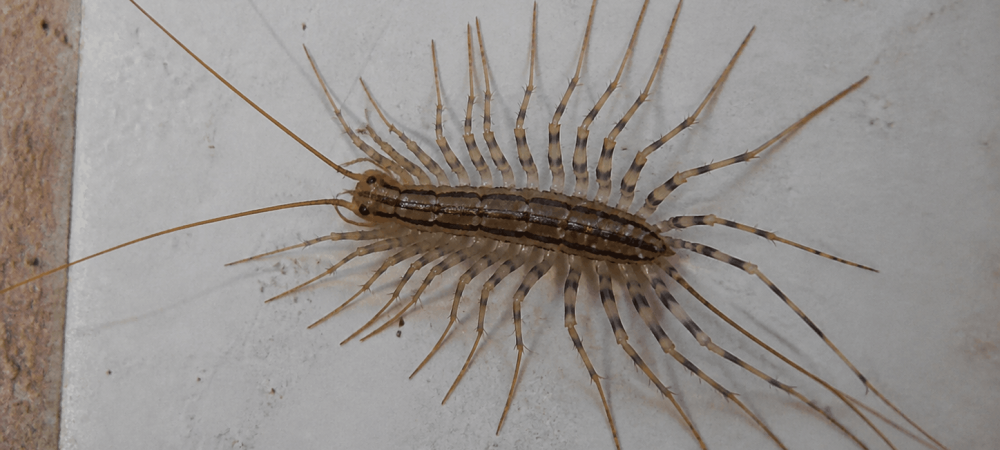
House centipedes have long, flattened bodies with many pairs of thin legs extending from each side. Their legs can make them look larger than they actually are, especially when they are moving quickly across a floor or wall.
They are typically yellowish-gray or light brown with darker markings along the body. Unlike many other centipedes, house centipedes are well adapted to living indoors and may remain inside year-round if they have access to moisture and food.
Their speed is one of their most noticeable traits. House centipedes are active hunters and use their long legs to chase down other small pests.
Where House Centipedes Are Commonly Found
House centipedes prefer cool, damp, protected areas. They are most often found in parts of the home where humidity is higher or where other insects are available as prey.
Common areas include:
- Basements
- Bathrooms
- Laundry rooms
- Crawl spaces
- Utility rooms
- Closets
- Garages
- Around floor drains
- Near plumbing fixtures
- Along foundation walls
Basements are especially common because they often provide moisture, darkness, and plenty of hiding places. If centipedes are appearing regularly upstairs, they may be moving from a basement, crawl space, or wall void into other parts of the home.
What Attracts House Centipedes Indoors
House centipedes are primarily attracted by two things: moisture and food.
They feed on other small pests, including spiders, silverfish, cockroaches, flies, and other insects. If those pests are present in the home, house centipedes have a reason to stay. Leaking pipes, condensation, humid basements, and poorly ventilated bathrooms can create conditions that support both centipedes and the insects they feed on.
Common contributing factors include:
- High indoor humidity
- Plumbing leaks
- Damp basements
- Poor ventilation
- Cracks and gaps around the foundation
- Other insect activity
- Cluttered storage areas
Because centipedes are predators, repeated sightings can sometimes point to a larger pest issue rather than an isolated centipede problem.
Are House Centipedes Dangerous?
House centipedes can bite, but bites are uncommon and usually happen only if they are handled or trapped against the skin. In most cases, they try to avoid people and quickly retreat when disturbed.
Their appearance can be alarming, but they are not known for causing structural damage or contaminating food. The bigger concern is often what their presence may indicate about moisture or other insect activity inside the home.
For that reason, eliminating a centipede here and there may not solve the problem if the conditions attracting them remain unchanged.
Signs of Ongoing Activity
Seeing one house centipede does not necessarily mean there is a larger problem. They may wander indoors occasionally, especially when outdoor conditions change.
Recurring sightings are more worth paying attention to, particularly if centipedes continue appearing in the same areas. Other signs may include:
- Frequent sightings in basements or bathrooms
- Centipedes appearing during the day
- Multiple sightings over a short period
- Activity near drains or plumbing
- Other insects appearing in the same areas
If centipede activity is ongoing, it is worth checking for leaks, humidity issues, and other pests nearby.
How to Reduce House Centipedes
Reducing moisture is one of the most effective ways to make your home less appealing to house centipedes. Start by checking areas where they are commonly seen and look for conditions that may be contributing to activity.
Helpful steps include:
- Repair leaking pipes and fixtures
- Use a dehumidifier in damp basements
- Improve ventilation in bathrooms and laundry rooms
- Seal cracks around the foundation
- Repair gaps around windows and doors
- Reduce clutter in storage areas
- Vacuum along baseboards and corners
- Address other insect activity in the home
It is also helpful to inspect the exterior of the home. Gaps around utility lines, foundation openings, basement windows, and door frames can all provide access.
Address the Other Pests They Feed On
House centipedes are often a secondary pest problem. If they have a steady food source, removing individual centipedes may only provide temporary relief.
Spiders, silverfish, cockroaches, flies, and other small insects can all support centipede activity. Reducing those populations can make the home less attractive to centipedes over time.
This is one reason recurring centipede activity should be looked at as part of the bigger picture. Moisture control, exclusion, and general pest prevention usually work better together than focusing on centipedes alone.
When Professional Pest Control May Help
If house centipedes continue appearing despite efforts to reduce moisture and seal entry points, there may be another pest issue contributing to the problem.
Professional pest control can help identify the insects centipedes are feeding on, locate areas of recurring activity, and determine whether additional treatment is needed. ProfExt provides general pest control services for Connecticut homeowners dealing with centipedes and other household pests.