
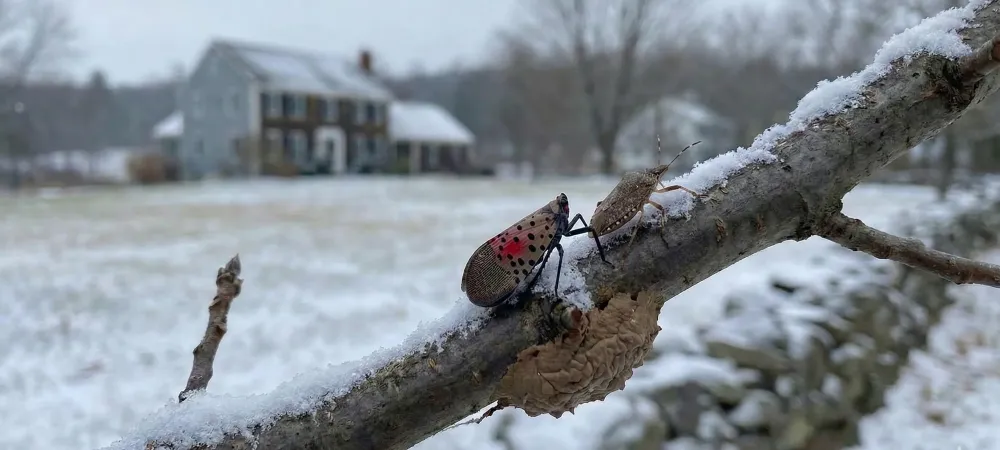
Spotted Lanternfly and Stink Bugs: Connecticut's Invasive Pest Problems and What to Do Now
Two invasive pests from Asia have established themselves across Connecticut, and late winter is the critical window to take action against both. If you've noticed shield-shaped bugs appearing on warm days or want to reduce the spotted lanternfly population on your property before spring, now is the time to act.
What Connecticut Homeowners Need to Know
- Spotted lanternfly egg masses are everywhere: January through April is the best time to find and destroy them before 30-50 nymphs hatch from each mass in spring.
- Stink bugs emerge on warm winter days: The brown marmorated stink bugs that have been hiding in your walls since fall will become active as temperatures rise, often appearing inside your home.
- Both pests are here to stay: Connecticut now has established populations of both invasive species across all counties, making awareness and management essential for homeowners.
Why Are These Invasive Pests Such a Problem?
Spotted lanternflies and brown marmorated stink bugs are both invasive species from Asia that have no natural predators in Connecticut. Without natural population controls, both species have spread rapidly across the state, damaging crops, trees, and ornamental plants while becoming significant nuisances for homeowners. The spotted lanternfly is now present in all Connecticut counties under a state quarantine order, while stink bugs have been established here since 2008.
For homeowners, the timing couldn't be more important. Spotted lanternfly eggs laid last fall will hatch in April and May unless destroyed now. Meanwhile, stink bugs that entered your home in autumn are overwintering in your walls and attic—and they'll emerge whenever a warm day tricks them into thinking spring has arrived.
Spotted Lanternfly in Connecticut: The Egg Mass Window
The spotted lanternfly first appeared in Connecticut in 2020, and by fall 2025, sightings had been reported in nearly every corner of the state. The Connecticut Agricultural Experiment Station (CAES) has maintained a quarantine order since 2021 to slow the spread. While adult lanternflies die after the first hard freeze, their egg masses survive winter temperatures and hatch the following spring.
According to CAES, "spotted lanternfly eggs hatch in the spring and early summer. Egg masses are yellowish-brown in color, most covered with a gray, waxy coating prior to hatching" ("Spotted Lanternfly - SLF"). This makes late winter the ideal time to locate and destroy egg masses before they produce the next generation of this destructive pest.
What Do Spotted Lanternfly Egg Masses Look Like?
Spotting egg masses takes practice because they blend into their surroundings remarkably well. The USDA describes them as resembling "wet, gray putty before turning dull and brown, mirroring a smear of cracked mud" ("Spotted Lanternfly"). Each mass is roughly 1 to 1.5 inches long and contains 30 to 50 eggs arranged in rows.
Fresh egg masses (laid in fall) appear shiny with a waxy coating. By late winter, this coating cracks and fades, making older masses look like dried mud or lichen on tree bark. Penn State Extension notes that "egg mass cases that were laid up to 2 years ago can still be found on trees and other structures". If you see small oval holes at the top of each egg, the mass has already hatched, and you're looking at an old shell.
Where to Look for Egg Masses
Spotted lanternflies lay eggs on almost any smooth outdoor surface. Priority areas to inspect include:
- Tree trunks and branches: Especially tree-of-heaven (their preferred host), maples, willows, and fruit trees
- Outdoor furniture and equipment: Grills, lawn mowers, playsets, and patio furniture
- Vehicles: Wheel wells, bumpers, undercarriage, and roof racks
- Structures: Fences, stone walls, brick foundations, and outdoor sheds
- Firewood: A common way egg masses travel to new locations
Keep in mind that most egg masses on trees are laid high in the canopy—research suggests only about 2% are within reach. However, destroying every accessible egg mass still makes a meaningful difference in reducing the population around your home.
How to Destroy Spotted Lanternfly Eggs
Removing egg masses is straightforward once you find them. Here's the recommended approach from agricultural extension services:
Step 1: Gather your supplies—a plastic card or putty knife, a sealable plastic bag, and rubbing alcohol or hand sanitizer.
Step 2: Squirt alcohol or hand sanitizer into the bag (a few ounces is sufficient).
Step 3: Hold the bag beneath the egg mass and use firm pressure to scrape the entire mass into the bag. You should hear popping sounds as individual eggs burst.
Step 4: Ensure all eggs are in contact with the alcohol solution, seal the bag, and dispose of it in the trash.
Alternatively, you can smash egg masses directly on the surface by applying firm, even pressure across the entire mass. Simply scraping eggs to the ground is not effective—eggs that fall intact can still hatch.
Report Your Sightings
If you find spotted lanternfly egg masses or adults on your property, report them to the Connecticut Agricultural Experiment Station through their online reporting form. This data helps state officials track the spread and target management efforts.
Brown Marmorated Stink Bugs: Why They're in Your House Now
While spotted lanternflies are relatively new to Connecticut, the brown marmorated stink bug (BMSB) has been here since 2008. These shield-shaped, mottled-brown insects are about the size of a dime and are best known for the foul odor they emit when disturbed or crushed.
Stink bugs don't reproduce or feed inside your home during winter. They entered in the fall, looking for a warm place to overwinter, typically hiding in wall voids, attics, and crawl spaces. The Connecticut Agricultural Experiment Station explains that "in spring or on warm winter days, they become active and often try to leave buildings" ("Brown Marmorated Stink Bug"). This is why you may suddenly see stink bugs crawling on windows or walls whenever temperatures rise—even in January or February.
How to Identify Stink Bugs
Brown marmorated stink bugs are often confused with other insects, including the western conifer seed bug (which also enters homes in fall). Key identification features include:
- Shield shape: Their body is nearly as wide as it is long, with a distinctive triangular plate on their back
- Mottled brown coloring: Look for alternating light and dark bands on the antennae
- White banding: The edges of their abdomen show alternating dark and light segments
- Size: Adults are approximately 1/2 to 3/4 inch long
If you see large numbers congregating on sunny exterior walls in fall, or appearing indoors on warm winter days, you're almost certainly dealing with brown marmorated stink bugs.
What to Do About Stink Bugs in Your Home
Once stink bugs are inside, your options are somewhat limited—but there are effective approaches that won't fill your home with their signature smell.
Vacuum them up: A vacuum cleaner is the most effective way to remove stink bugs without triggering their odor. Use a shop vac or a vacuum with a bag, as the smell can linger in bagless models. Some homeowners dedicate a cheap handheld vacuum specifically to stink bug duty.
Use soapy water: Gently sweep or knock stink bugs into a bucket containing a few inches of soapy water. The soap breaks the surface tension, causing them to sink and drown without releasing their defensive odor.
Avoid crushing: Squishing stink bugs releases their defensive chemicals, which can stain surfaces and leave a lingering smell. Pesticides can also trigger the odor and may not reach bugs hidden deep in wall voids.
Seal entry points: The best long-term strategy is prevention. Before next fall, seal gaps around windows, doors, utility penetrations, and foundations. Repair torn screens and install door sweeps. This physical exclusion is far more effective than chemical treatments for overwintering pests.
Spotted Lanternfly vs. Stink Bug: Key Differences
While both pests are invasive species from Asia that overwinter in Connecticut, they require different management approaches:
Spotted lanternflies are primarily an outdoor pest that damages plants by feeding on sap. They excrete sticky "honeydew" that promotes sooty mold growth. Adults die after the first freeze, but their egg masses survive winter. Your action window is now—destroy egg masses before April/May hatching.
Brown marmorated stink bugs are both an agricultural pest and a household nuisance. They enter homes in the fall and emerge throughout winter on warm days. They don't damage your home or reproduce indoors, but they can be extremely frustrating in large numbers. Management focuses on exclusion and removal.
Both pests feed on a wide variety of plants—stink bugs damage over 100 plant species, including fruit trees and vegetables, while spotted lanternflies threaten grapes, apples, hops, and hardwood trees. For Connecticut's agricultural industry, both represent significant economic concerns.
Prevention Tips for Invasive Pest Management
Taking proactive steps now can significantly reduce your pest problems throughout the year:
- Conduct monthly egg mass searches: Walk your property every few weeks through April, checking trees, outdoor equipment, and structures for spotted lanternfly egg masses.
- Inspect vehicles before traveling: Check wheel wells, bumpers, and undercarriage—especially if you've parked near trees. This prevents spreading lanternflies to new areas.
- Buy firewood locally: Don't transport firewood from other areas, as egg masses can hitchhike on wood surfaces.
- Seal your home before fall: Address gaps and cracks in your home's exterior before stink bugs begin seeking shelter in September and October.
- Remove tree-of-heaven: This invasive tree is the spotted lanternfly's preferred host. Removing it from your property reduces your attractiveness to lanternflies (though they feed on many other trees as well).
- Report sightings: Help state officials track these pests by reporting spotted lanternfly findings to CAES.
When to Call a Professional
While homeowners can take significant steps against both pests, certain situations warrant professional pest control services:
- Large stink bug infestations: If you're seeing dozens of stink bugs daily throughout winter, professional treatment can help reduce populations in wall voids and attic spaces.
- Recurring pest problems: If the same pests return year after year despite your prevention efforts, a professional inspection can identify entry points and harborage areas you may have missed.
- Comprehensive property assessment: Professionals can evaluate your property's vulnerability to invasive species and recommend targeted prevention strategies.
- Tree treatments: For severe spotted lanternfly infestations, systemic treatments applied to host trees can reduce populations—though this is most effective when combined with egg mass removal and habitat modification.
At ProfExt Pest Control, we've been helping Connecticut homeowners manage pest problems for 40 years. Our technicians stay current on emerging invasive species threats and can help you develop a comprehensive approach to protecting your home and landscape.
Take Action Now—Before Spring Arrives
Connecticut's invasive pest problems aren't going away. Spotted lanternflies continue to spread despite quarantine efforts, and stink bugs have become a permanent part of our landscape. But homeowners who take action now—destroying lanternfly egg masses before they hatch and sealing homes against next fall's stink bug invasion—can significantly reduce their pest burden.
The next few months represent your best opportunity to make a difference. Walk your property, scrape those egg masses, and note any gaps in your home's exterior that need sealing before autumn.
If you're dealing with a significant pest problem or want a professional assessment of your property, contact ProfExt Pest Control today for a free quote. Our local team understands Connecticut's unique pest pressures and can help you protect your home from invasive species and other pests year-round.
Sources
- "Brown Marmorated Stink Bug (BMSB)." Connecticut Agricultural Experiment Station.
- Leach, Heather. "What Should You Do With Spotted Lanternfly Egg Masses?" Penn State Extension.
- "Spotted Lanternfly." USDA Animal and Plant Health Inspection Service, 27 Aug. 2025.
- "Spotted Lanternfly - SLF." Connecticut Agricultural Experiment Station.